

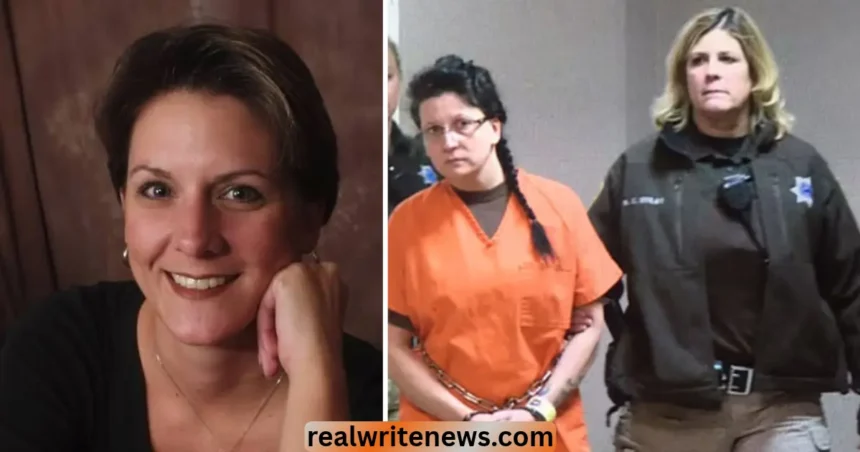
Cari Lea Farver was a 37-year-old mother from Macedonia, Iowa, whose disappearance became one of the most unusual missing-person and murder cases in the United States. She was last seen alive on November 13, 2012, in Omaha, Nebraska. At first, her family and investigators faced a confusing situation because messages continued to appear from her phone and online accounts after she vanished. Those messages created the impression that Cari was still alive. Years later, investigators established that someone else had been using her identity. The case ultimately led to Shanna “Liz” Golyar being convicted of first-degree murder. Farver’s body has never been found, but the Nebraska Supreme Court later upheld Golyar’s convictions.
Who Was Cari Farver?
Cari Farver was born on November 30, 1974, and lived in Macedonia, Iowa, in the years before her disappearance. She was a mother and worked in Omaha for West Corporation, a telecommunications company. Public case records describe her as approximately 5 feet 7 inches tall, with brown hair, hazel eyes, and several tattoos. Her family described her disappearance as deeply unusual because she had responsibilities and regular contact with relatives. She had a teenage son, and her mother, Nancy Raney, was closely involved in her life. Farver’s case later became widely known because her disappearance was followed by years of messages apparently sent in her name. Investigators eventually determined that these communications were part of an elaborate impersonation scheme.
Cari Farver and David Kroupa
The events leading to the disappearance began during the fall of 2012, when Farver met David Kroupa, an Omaha auto mechanic. Kroupa had previously met Shanna Golyar through an online dating site and described that relationship as casual. He was also seeing other women, and he did not present himself as looking for an exclusive relationship. Near the end of October, Kroupa met Farver, and the two quickly became interested in each other. According to the Nebraska Supreme Court record, their first date took place on October 29, 2012. That meeting became important to the later investigation because Golyar knew Kroupa and viewed Farver as a romantic rival.
The October 29, 2012 Encounter
The relationship between Farver and Kroupa developed quickly, but their first date also brought an unexpected confrontation. While Kroupa and Farver were together at a restaurant in Omaha, Kroupa received repeated calls and messages from Golyar. After the date, Farver went with Kroupa to his apartment. Golyar soon appeared at the apartment building and asked to retrieve belongings. Farver left after seeing Golyar at the entrance. Kroupa later went to Farver’s home in Macedonia, and the two continued seeing each other during the following weeks. Investigators later learned that Farver’s vehicle was vandalized in early November. The court record also connected a false Facebook persona associated with Golyar to activity in Macedonia around that time.
Farver’s Final Night
On November 12, 2012, Farver worked late at her job in Omaha. She was beginning a weeklong project that required unusual hours, and coworkers expected her to return the next morning. She had also arranged for her teenage son to stay with her mother and stepfather during that week. Farver then spent the night at Kroupa’s apartment. According to the Nebraska Supreme Court record, Kroupa left for work at approximately 6:20 a.m. on November 13. Farver was awake and using her laptop when he left. That was the last confirmed sighting of her. Later records showed activity from her phone and accounts, but investigators eventually concluded that this activity did not prove she was alive. The date became the central point in the murder investigation.
The Strange Messages After Her Disappearance
The case became complicated because Cari Farver’s phone and online accounts continued showing activity. On the morning of November 13, messages were sent to Kroupa from Farver’s phone. One message asked whether he wanted to live together. When he rejected the idea, another message quickly ended the relationship. Other communications went to Farver’s mother. Soon afterward, additional messages claimed Farver had found another job. Her employer later received a message saying she was resigning and that Shanna Golyar would replace her. Golyar subsequently submitted an online application to the company. These events created a misleading picture of Farver’s actions. Investigators eventually discovered that digital activity attributed to Farver was actually connected to an impersonator.
When Cari Farver Was Reported Missing
Farver’s mother became increasingly concerned when her daughter failed to maintain their normal contact. On November 16, 2012, Nancy Raney officially reported Cari missing to the Pottawattamie County Sheriff’s Office. Farver had also failed to appear for expected family commitments. Her absence was particularly troubling because she was normally involved in her son’s life and communicated regularly with her mother. Authorities began attempting to determine where she had gone. Her vehicle was eventually located in Omaha on January 10, 2013, in an apartment complex area. Yet Farver herself remained missing. The continuing messages from her accounts complicated the investigation and helped create the false impression that she might have voluntarily disappeared.
Why the Investigation Became So Difficult
One of the most important features of the Cari Farver case was the false digital trail. Her Facebook account appeared active after her disappearance, while messages and emails continued reaching people connected to the case. The Nebraska Supreme Court later documented that an imposter Facebook account had been created using photographs and information from Farver’s genuine account. Investigators also determined that the fake account was digitally linked to Golyar. Messages supposedly written by Farver came from numerous telephone numbers and email accounts. Kroupa reportedly received dozens of emails in a single day. Because the messages appeared to come from a missing woman, they initially distracted investigators from the possibility that Farver had already been killed.
The Investigation Reopens in 2015
The investigation gained new momentum in 2015, when investigators with the Pottawattamie County Sheriff’s Office revisited the evidence. Sergeant Jim Doty and investigator Ryan Avis became particularly important in the renewed investigation. Rather than accepting the digital messages at face value, they began examining who could actually have created them. Digital forensic work helped investigators identify connections between the communications and people close to the situation. According to A&E’s account of the investigation, investigators determined that Golyar had been posing as Farver. The discovery changed the direction of the case. The question was no longer simply where Farver had gone. Investigators now had to determine what had happened to her and whether the person impersonating her was connected to her disappearance.
Digital Evidence Changed the Case
Digital evidence eventually became one of the strongest elements in the prosecution’s case. Investigators examined phones, accounts, IP information, photographs, and other electronic records. The Nebraska Supreme Court noted that many messages supposedly from Farver were connected to Golyar through digital evidence. Investigators also found evidence involving fake identities and online accounts. This was significant because the apparent activity from Farver’s accounts had helped keep the mystery alive for years. Once investigators understood that someone else was controlling those identities, the disappearance looked very different. The case demonstrated how electronic evidence can reveal patterns that are difficult to see through traditional investigation alone. It also showed how a person can use digital communication to create an artificial identity and mislead people around them.
The 2013 House Fire
Another disturbing event occurred on August 17, 2013, when a fire was reported at a residence Golyar rented in Omaha. Investigators found multiple points of origin and accelerants, leading them to determine that the fire had been intentionally set. Four of Golyar’s pets died. Around the same period, emails supposedly written by Farver claimed responsibility for the fire and threatened Golyar. The timing later became important to the prosecution because the messages helped maintain the story that Farver was stalking and attacking Golyar. The Nebraska Supreme Court ultimately upheld Golyar’s conviction for second-degree arson as well as her murder conviction. The fire therefore became another part of the broader pattern of deception surrounding the case.
The 2015 Shooting and Another False Accusation
In December 2015, another major incident pushed investigators closer to the truth. Golyar reported that she had been shot in the leg at a park and accused Amy Flora, the former partner of David Kroupa, of the shooting. Golyar’s accounts of the incident varied, according to the court record. Investigators later examined phone information connected to Kroupa and discovered that many messages attributed to Farver had been sent through an internet connection associated with a residence where Golyar was living. This digital evidence became highly significant. It suggested that the person behind the communications was not the missing Farver but someone with access to Golyar’s environment and devices. The investigation increasingly focused on Golyar’s role in the elaborate series of events.
Evidence Connected Shanna Golyar to Farver
Investigators ultimately developed a substantial body of circumstantial and digital evidence against Shanna Golyar. The case included evidence that Golyar had considered Farver a romantic rival, impersonated Farver online, and created or used false identities. The Nebraska Supreme Court specifically noted that Golyar posed as Farver and other people through emails, texts, and social media. Prosecutors also presented evidence involving communications that appeared to confess to Farver’s murder while being sent by someone impersonating another person. This unusual evidence helped establish the prosecution’s theory without a recovered body. The case therefore became an important example of how prosecutors can rely on circumstantial and digital evidence when direct physical evidence is limited.
The Body of Cari Farver Was Never Found
One of the most frequently asked questions about Cari Farver is whether her remains were ever recovered. They were not. Her body has never been found. That fact became a major issue during the prosecution and appeal. The Nebraska Supreme Court explained that Nebraska law does not require the body of a missing person to be recovered in order to prove a homicide. Instead, circumstantial evidence surrounding the disappearance can establish that a person died as a result of criminal conduct. The court concluded that the evidence presented at trial was legally sufficient to support the convictions. This made the case especially notable because the prosecution successfully established murder without producing Farver’s remains.
Arrest and Trial of Shanna Golyar
On December 22, 2016, authorities arrested Golyar and charged her with first-degree murder in Farver’s death. The case went to a bench trial, meaning the judge served as the fact finder rather than a jury. The trial began in May 2017, and on May 24, 2017, Golyar was found guilty of first-degree murder and second-degree arson. The prosecution relied heavily on the extensive collection of digital, circumstantial, and behavioral evidence developed during the investigation. The absence of Farver’s body did not prevent the court from reaching a guilty verdict. Iowa Cold Cases records the arrest, trial, guilty verdict, and later sentencing as the major milestones in the resolution of the case.

Golyar’s Sentence and Appeal
On August 15, 2017, Golyar received a life sentence for first-degree murder. She also received a consecutive sentence of 18 to 20 years for second-degree arson. Golyar appealed her convictions, arguing that the evidence was insufficient and raising claims concerning her trial counsel. In a decision filed on November 9, 2018, the Nebraska Supreme Court affirmed the convictions. The court specifically addressed the issue of proving homicide without recovering a body and concluded that circumstantial evidence could establish the necessary facts. The ruling was important because it confirmed that the trial court had sufficient evidence to find Golyar guilty beyond a reasonable doubt.
Cari Farver in Lover, Stalker, Killer
The story of Cari Farver reached a much wider audience through the Netflix documentary Lover, Stalker, Killer, directed by Sam Hobkinson. Released in 2024, the documentary examines the relationship between Farver, Kroupa, and Golyar while focusing on the digital deception that followed Farver’s disappearance. Netflix later published additional material discussing the case and the documentary’s production. The filmmakers emphasized the importance of presenting Farver as a real person rather than allowing the false online identity created after her disappearance to define her story. The documentary helped introduce the case to viewers around the world and renewed interest in the investigation, the role of digital evidence, and the family’s long struggle to understand what happened.
Why the Cari Farver Case Still Matters
The Cari Farver case remains significant because it combines several issues that are increasingly relevant in modern investigations. It involved online dating, identity deception, social media impersonation, digital harassment, and a missing-person investigation. At the center was a woman whose identity was effectively taken over online after her disappearance. Investigators had to distinguish genuine activity from fabricated activity while reconstructing events that happened years earlier. The case also illustrates the importance of revisiting cold cases with modern forensic methods. Digital evidence can preserve connections between people, devices, accounts, and locations that may not be obvious during an initial investigation. For readers interested in true crime, the case offers a powerful example of how technology can both obscure the truth and eventually help uncover it.
Cari Farver’s Legacy
Remembering Cari Farver means looking beyond the shocking circumstances of her disappearance. She was a daughter, mother, employee, and friend whose life existed long before the case became a subject of documentaries and true-crime coverage. Her family spent years dealing with uncertainty while false messages created confusion about what had happened to her. Her mother, Nancy Raney, became an important public voice for her daughter throughout the investigation. Although Farver’s remains have never been recovered, the legal system ultimately recognized her death as a homicide and held Golyar responsible. Her story continues to receive attention because it highlights the human cost of obsession and deception while also reminding investigators and families that unexplained disappearances deserve careful, persistent attention.
Conclusion: Remembering Cari Farver
The story of Cari Farver is a tragic example of how a disappearance can become even more difficult when someone deliberately creates a false digital identity for the missing person. Farver disappeared on November 13, 2012, and her family initially had no clear explanation for what had happened. Years of confusing messages followed, but investigators eventually established that those communications were part of an elaborate impersonation scheme. Shanna Golyar was convicted of first-degree murder and second-degree arson in 2017, and the Nebraska Supreme Court affirmed the convictions in 2018. Farver’s body has never been found. Even so, the evidence presented in court established the legal case against Golyar. Farver’s story remains a reminder that the person behind a digital account may not be the person they claim to be.
FAQs About Cari Farver
Who was Cari Farver?
Cari Lea Farver was a 37-year-old mother from Macedonia, Iowa. She worked in Omaha and had a teenage son. She disappeared on November 13, 2012, after spending the previous night at David Kroupa’s apartment in Omaha. Her mother reported her missing three days later. Farver’s case became nationally known because messages and social-media activity continued appearing under her name after she disappeared. Investigators later determined that someone else had been impersonating her.
What happened to Cari Farver?
According to the prosecution’s case and the subsequent conviction of Shanna Golyar, Farver was murdered shortly after she disappeared. Her body has never been recovered. The Nebraska Supreme Court affirmed that circumstantial evidence was legally sufficient to establish the homicide even without the discovery of her remains.
Who killed Cari Farver?
Shanna “Liz” Golyar was convicted of killing Cari Farver. She was found guilty of first-degree murder in May 2017 and sentenced to life imprisonment. She was also sentenced to a consecutive 18-to-20-year term for second-degree arson. The Nebraska Supreme Court affirmed the convictions in November 2018.
Was Cari Farver’s body ever found?
No. Cari Farver’s body has never been found. Her missing status became one of the unusual aspects of the case. The Nebraska Supreme Court specifically ruled that a missing person’s body is not legally required to prove homicide when sufficient circumstantial evidence establishes that the person died because of criminal conduct.
Why did people believe Cari Farver was still alive?
People received texts, emails, and social-media messages that appeared to come from Farver after her disappearance. Investigators later determined that Golyar had impersonated Farver and used false accounts and other digital methods. This deception contributed to the confusion surrounding the case for years.
Is Cari Farver’s case featured in a documentary?
Yes. The case is featured in Netflix’s Lover, Stalker, Killer, a true-crime documentary directed by Sam Hobkinson. The documentary explores the relationships among Farver, David Kroupa, and Shanna Golyar and examines how digital evidence helped expose the deception.
What makes the Cari Farver case unusual?
The case is unusual because investigators eventually proved a murder without recovering the victim’s body, while also uncovering a long-running digital impersonation scheme. The combination of circumstantial evidence, digital forensics, false online identities, and electronic communications played a central role in the investigation and prosecution.